 Spin Wheel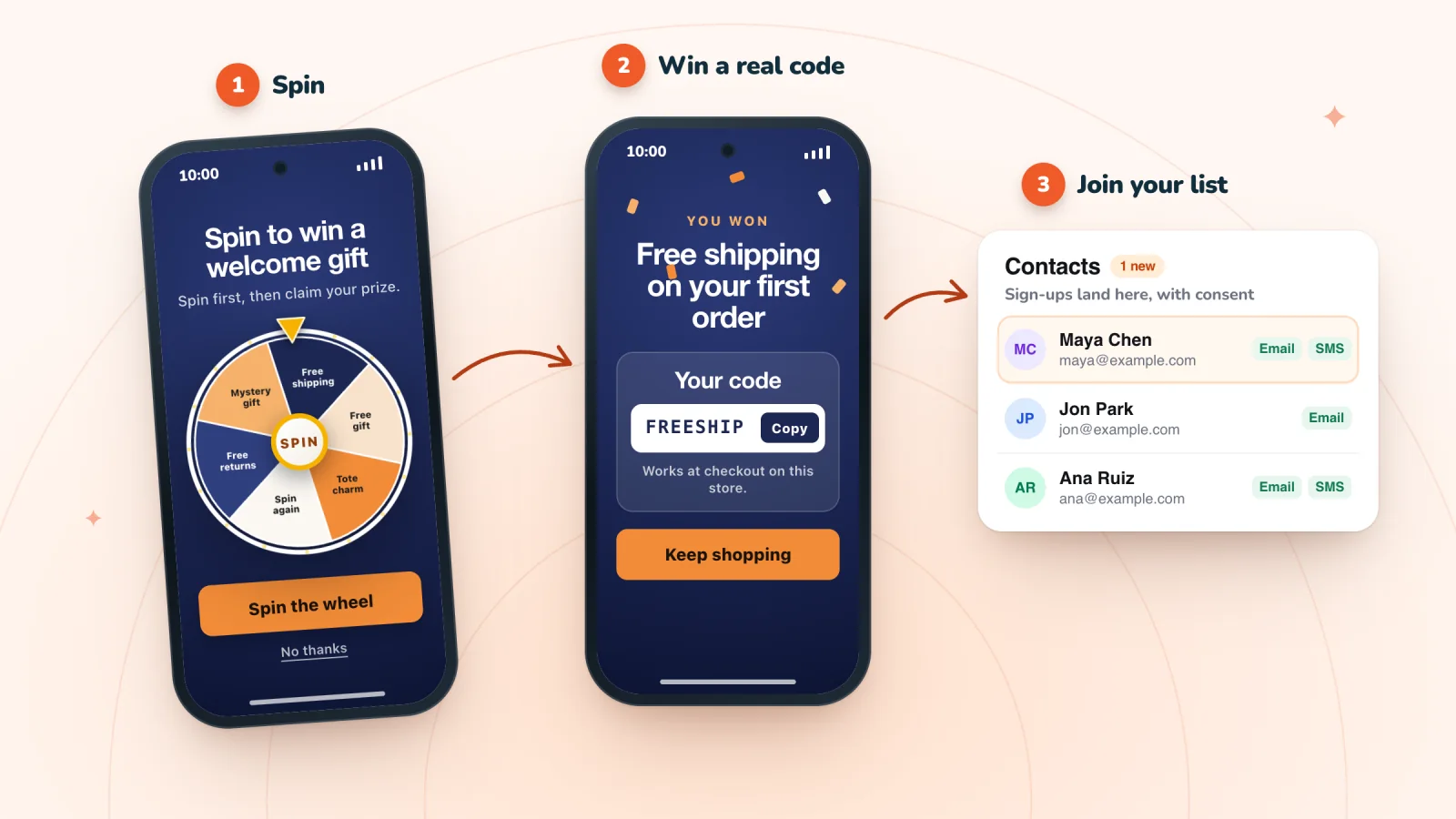
On this page
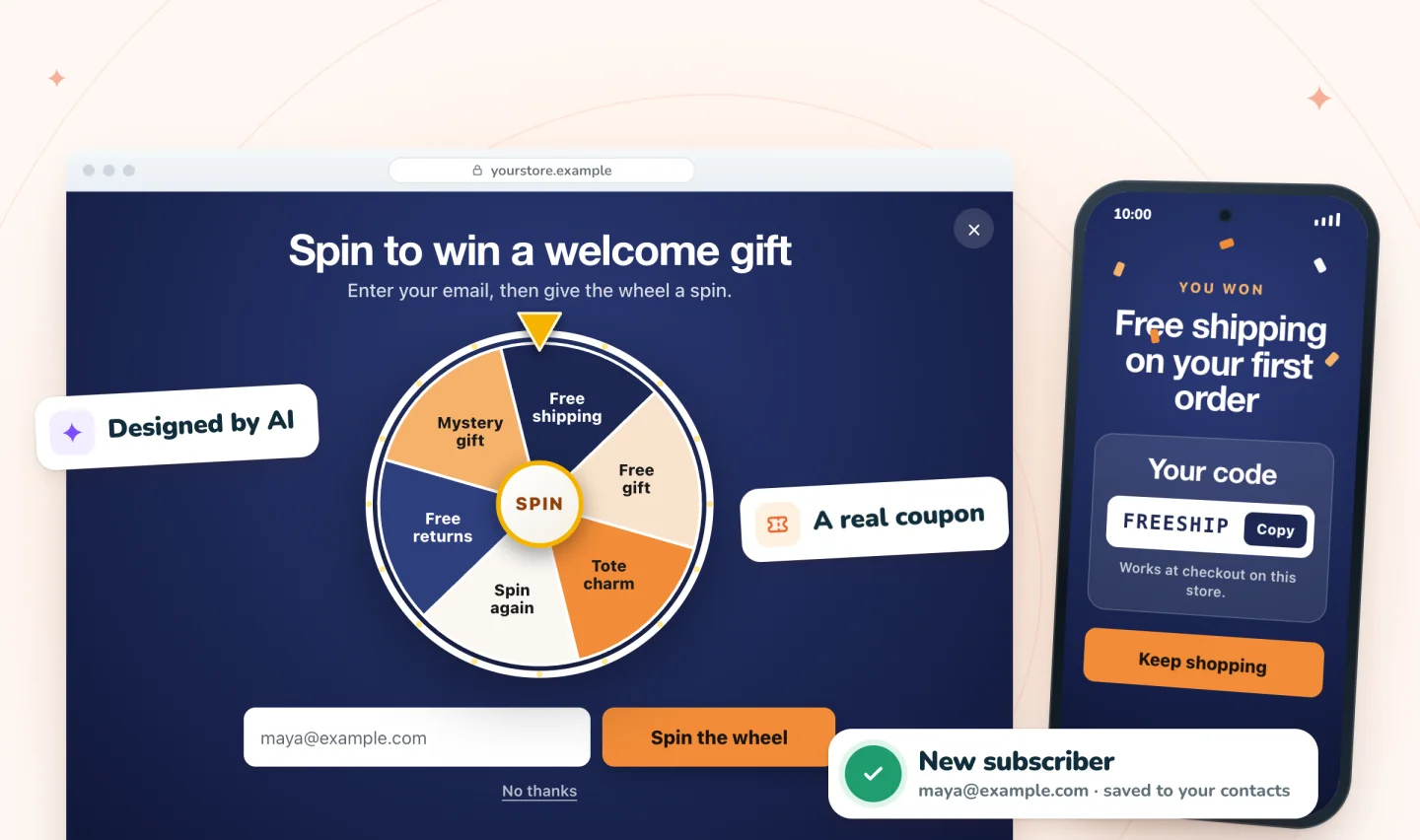
A spin-to-win pop-up is a small game that appears on your store. A shopper spins a wheel, lands on a prize such as free shipping or a discount, and leaves an email address or phone number to get it. This guide walks through how the pieces fit together, the two ways to order the flow, and the kinds of stores where a wheel is a poor match.
Key takeaways
- Make sure the prize is decided before the wheel moves, so the spinning animation never picks the result.
- Ask for the email first when list growth is the main goal, or let shoppers play first so starting takes one tap.
- If you can't decide on an order, run one for a few weeks, then switch and compare sign-ups.
- Choose a calmer pop-up if you never discount, have very thin margins, sell big considered purchases or serve mostly repeat customers.
The parts of a spin-to-win pop-up
Every spin wheel, however it looks, is built from the same handful of parts. Knowing them makes each setup decision easier.
- The trigger. This decides when the pop-up appears. Common choices are a short delay after arrival, a scroll down the page, a visit to a few pages, or a sign that the shopper is about to leave.
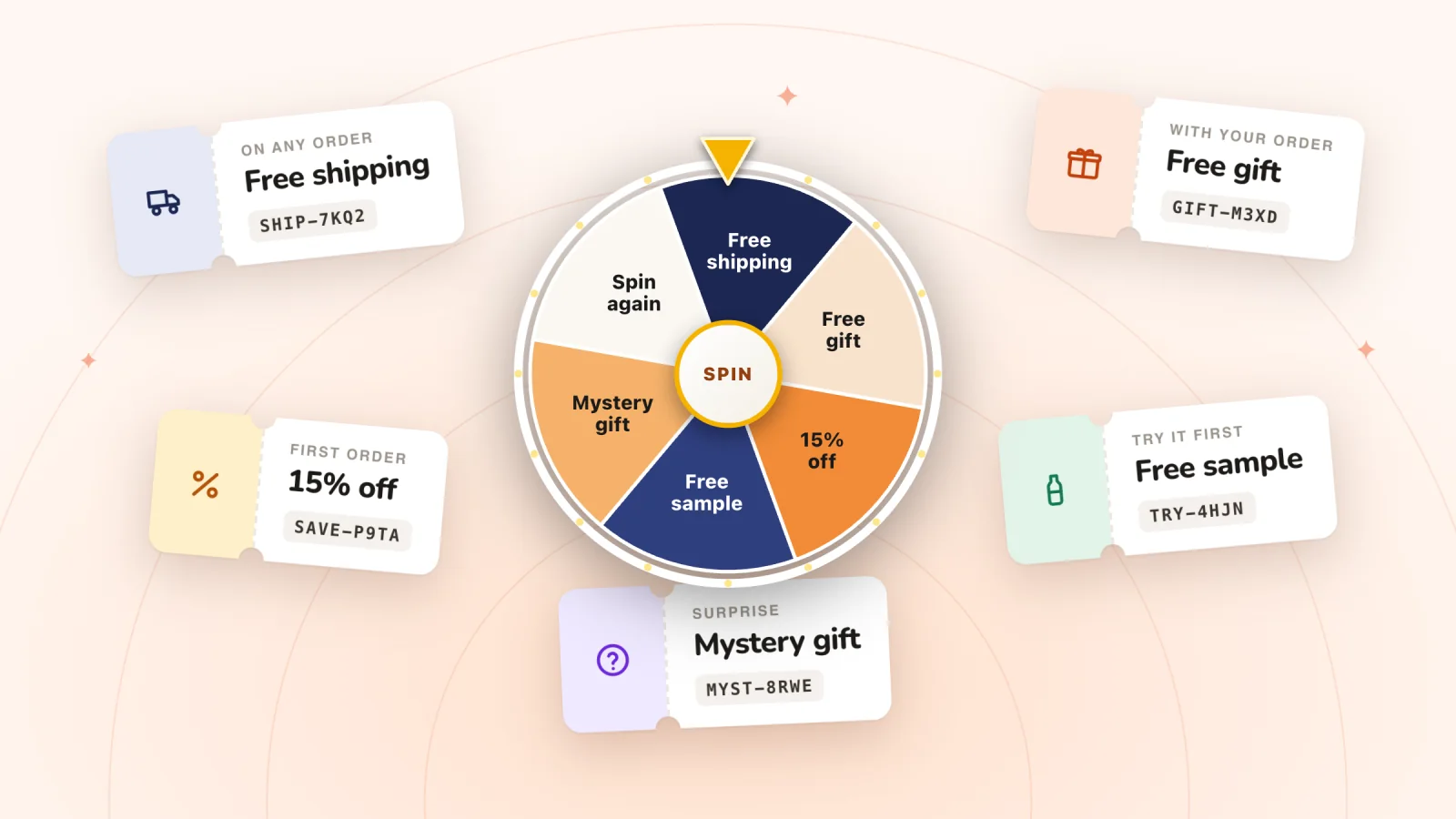
- The slices. Each slice is a prize. A typical wheel mixes small everyday prizes with one rare headline prize.
- The form. This is where the shopper types an email address, a phone number, or both.
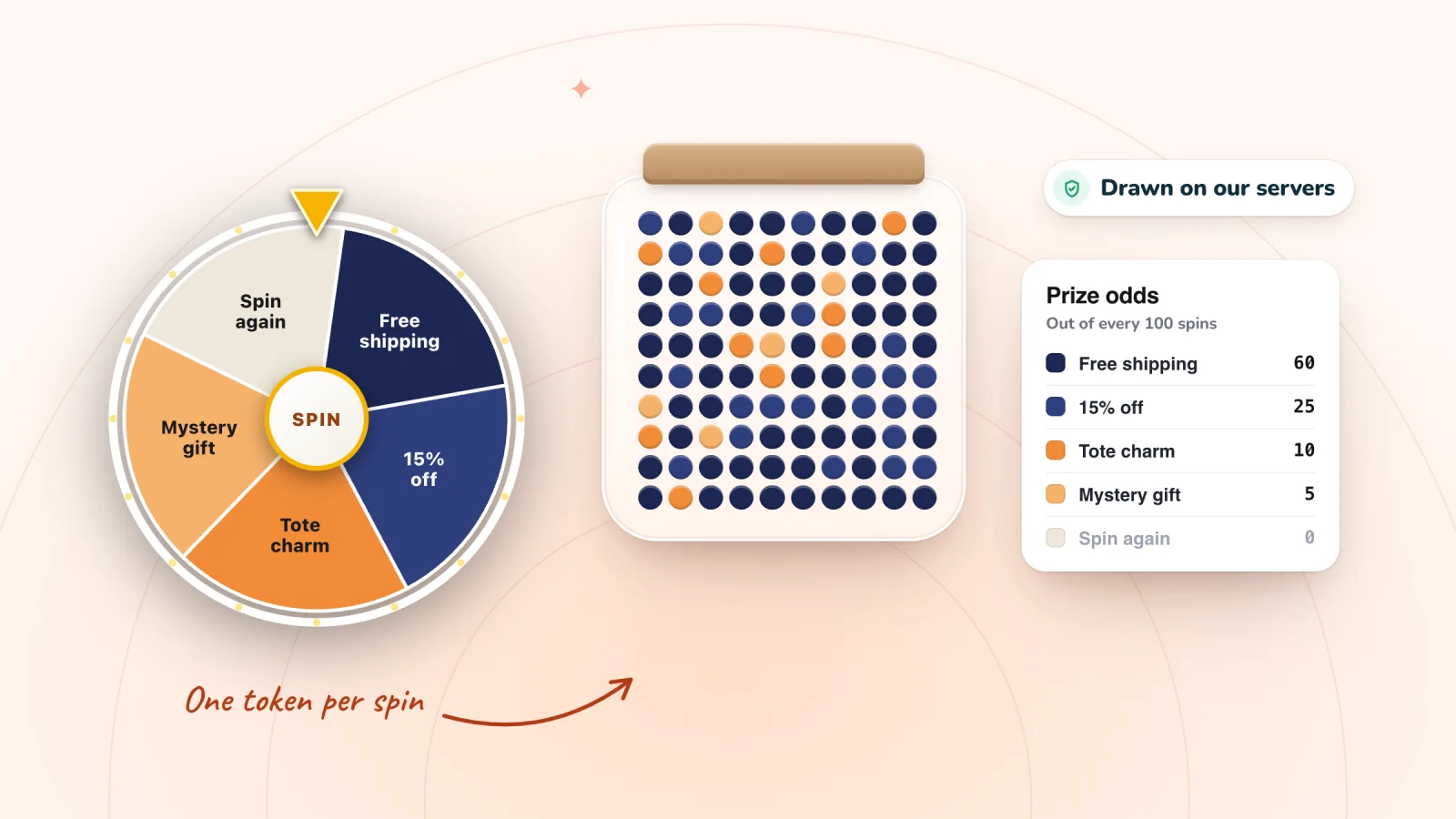
- The draw. Something has to pick the winning slice, using a chance you set for each prize.
- The code. The prize arrives as a coupon code the shopper can use at checkout.
- The contact record. The sign-up has to land somewhere you can reach it later, along with the permission the shopper gave.
These parts depend on each other. A clever trigger can't rescue a dull prize, and a great prize means little if the code is hard to find once the wheel stops.
What happens during a spin
Here is one visit from start to finish. Say you sell handmade soap at $9 a bar, and a new visitor lands on your lavender soap page from a social post.
- She reads the product page for a few seconds. Then the pop-up slides in with a wheel and a short line about winning a prize.
- She taps the spin button.
- Before the wheel moves, the result is already decided. The animation is there for fun, and it slows down to land on the slice that was picked.
- The wheel stops on free shipping. The pop-up asks for her email address so she can claim it.
- She types her email, and her code appears on screen, ready to copy.
- She adds two bars to her cart, pastes the code at checkout, and pays. Her email address is now in your contacts, so your next message can reach her.
Step 3 is easy to miss. A well-built wheel never lets the spinning animation decide anything. Where that decision happens, and who can see it, matters a great deal. The guide to setting spin wheel odds explains why.
Sign up then spin, or spin then claim
The visit above put play first, with the sign-up coming after to claim the prize. You can also put the form before the game. Both are reasonable, and they feel quite different to the shopper.
| Sign up, then spin | Spin, then sign up to claim | |
|---|---|---|
| First thing the shopper does | Types an email or phone number | Taps the wheel |
| What the form promises | A chance at a prize | The prize they just landed on |
| Who joins your list | Everyone who plays | Only players who claim |
| Feels like | A fair trade up front | A reward to collect |
| Main trade-off | Some visitors never start | Some players see a prize and walk away |
When sign-up first makes sense
Putting the form first works well when growing your list is the main goal. Every person who plays is a subscriber, so your list grows with every spin. The copy has to work harder, though. The shopper hasn't won anything yet, so the headline should make the reward feel real and specific, such as "Every spin wins something."
When play first makes sense
Letting people play first lowers the effort to begin. One tap starts the fun, and once the wheel stops, the shopper has a concrete prize in front of them. Asking for an email at that point feels like collecting a winning ticket. The cost is that some players will look at their prize and close the pop-up without claiming it.
Put a spin-to-win pop-up on your store
AI designs it from your brand, every spin wins a real coupon, and sign-ups land in your contacts. Free for one pop-up.
Add to Wix, it's free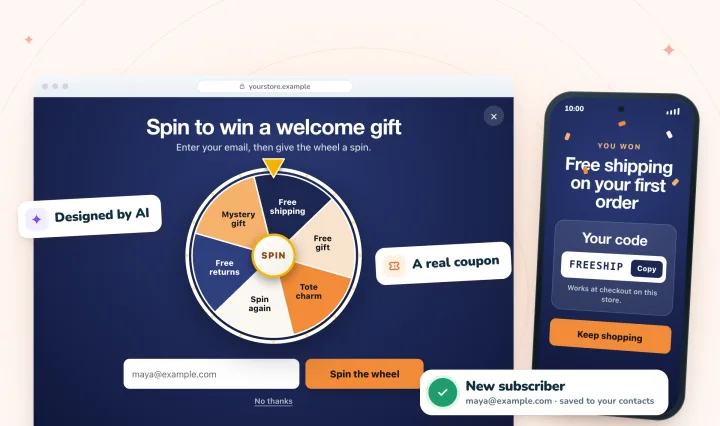
Where a spin wheel fits
A wheel works best when a small prize can tip a first-time visitor toward a first order. That tends to describe stores like these:
- Shops with many products at modest prices. Jewelry, candles, snacks, socks, stickers and pet treats all suit a playful prize.
- Giftable products. A gift buyer may welcome a little extra on the order, such as free wrapping or free shipping.
- Stores that already use offers. If free shipping or a welcome discount is already part of how you sell, a wheel puts some fun around something you'd give away anyway.
- Launches and busy seasons. A wheel gives returning visitors something new to look at.
It also helps when a lot of your visitors are new to you. A first-time visitor has no reason to trust you yet, and a game is a friendly way to say hello.
Where a wheel is the wrong tool
A spin wheel isn't right for every store. Think twice in these cases.
- Brands that never discount. If your prices are firm, a wheel full of discounts sends a mixed message. A plain sign-up form with a different kind of reward may suit you better.
- Very thin margins. If every prize costs more than a typical order earns, the game loses money each time someone wins. A quick break-even check shows whether a prize can pay for itself, and the guide to spin wheel prize ideas shows how to price each slice.
- Big, considered purchases. Someone weighing a $2,000 sofa wants measurements, materials and delivery times. A playful wheel can feel out of place next to that decision.
- Wholesale and trade buyers. They expect account pricing, and a game feels out of step with that.
- Stores that sell mostly to repeat customers. If your visitors already get your emails, a wheel has little to offer them.
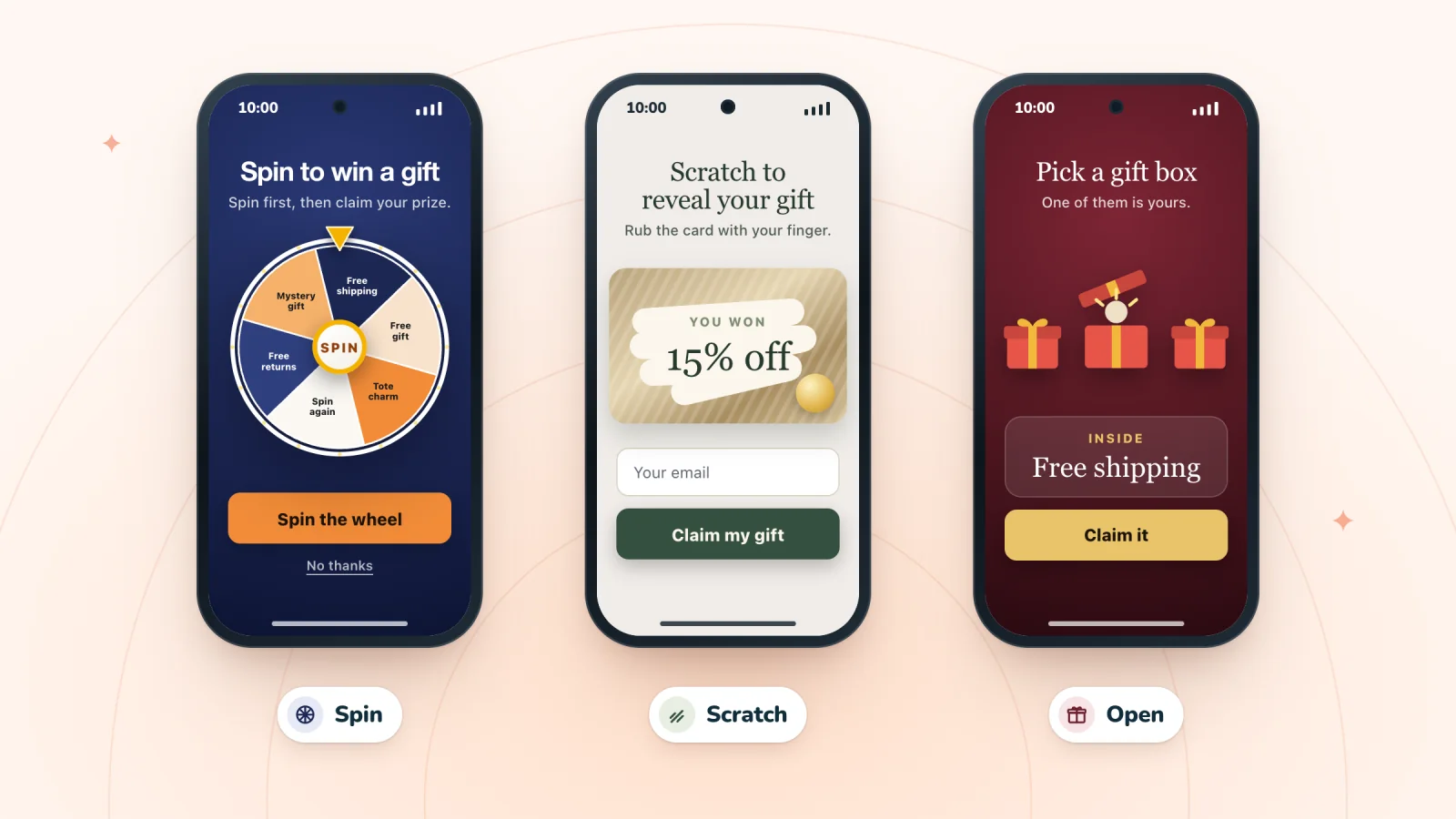
For these stores, a quieter option such as a classic email sign-up pop-up may fit better. A scratch card or a mystery gift box can also feel calmer than a spinning wheel while keeping a small reward.
Frequently asked questions
Do spin-to-win pop-ups increase sales?
They can, when the setup fits the store. A wheel gives first-time visitors a small, concrete reason to place a first order, and it adds them to your list so you can reach them later. Results depend on the prizes, the timing and who visits, so judge it on your own numbers: sign-ups, codes used and what the prizes cost.
Is a spin-to-win promotion legal?
It can be, but the rules depend on where you sell. A wheel where every spin wins a prize works like a tiered offer, since nobody leaves with nothing. A wheel that can land on nothing, especially one with a valuable headline prize, starts to look like a game of chance, and contest or sweepstakes rules may apply. This is general information, not legal advice, so check the rules where you sell.
How many slices should a spin wheel have?
Six to eight slices usually look right. Fewer can make the wheel look sparse, and more make the labels hard to read while it turns. Fill the ring with a mix of prizes, from a common everyday prize to one rare headline prize. If you only have four or five prizes, decoy slices can fill the gaps, as long as they never come up.
Do spin-to-win pop-ups work on phones?
Yes, as long as the pop-up is built for small screens. It should leave part of the page visible, use buttons big enough for a thumb, and keep the winning code easy to copy. Keep the spin short, and respect phone settings that ask for reduced motion. On phones, Spin Wheel slides up from the bottom, and a closed pop-up waits as a small tab the shopper can reopen.
Try it on your store
Spin Wheel adds a spin-to-win pop-up to a store built on Wix, with real coupons from your own store as prizes. By default the game opens ready to play, a revealed prize stays claimable for 24 hours, and you can switch to asking for the email first. See how it looks on the spin-to-win pop-up page.

We build marketing apps for online stores: myuser.ai writes and sends emails and texts from a store's own products, and we make Spin Wheel and Session Recordings for Wix sites. Product details in our guides are checked against the apps themselves.